Thursday, January 16, 2014

Formal Project Update

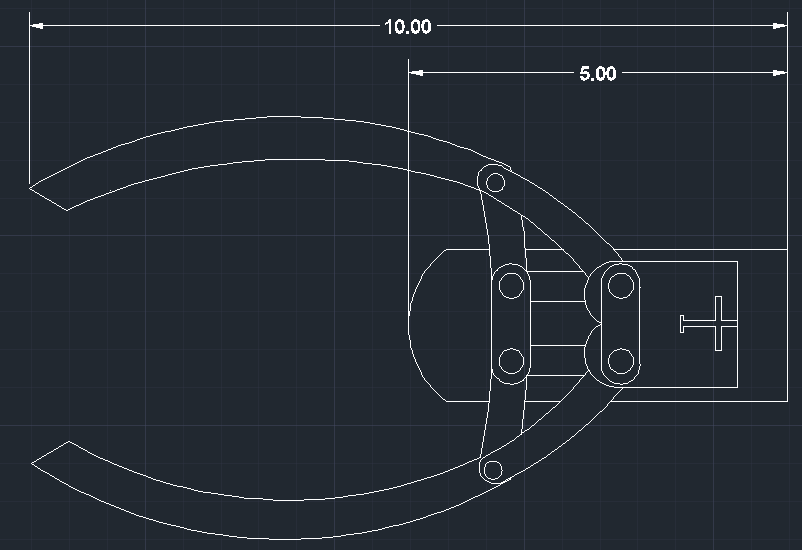
3D image of my current arm design.


Neptune Aquatic Center swimming pool
 
 
Robot capping oil spill
 
Underwater research
 Ring transfer


Tuesday, November 19, 2013

Testing Procedures

Testing Type: Exploratory
Testing Stage: Preliminary
State of Solution: Stationary
Condition of Testing Stage: Classroom
Tools and Equipment reguired: Paper, pencil, model magic, cabinet handles, wooden dowels
 
Testing Procedures:
1.      Draw alternate solutions
2.      Choose one alternate solution to model after
3.      Model parts after drawing
4.      Discuss functions with teachers
5.      Re-design model after discussion


Testing Type: Assessment
Testing Stage: Preliminary
State of Solution: Stationary
Condition of Testing Stage: Lab setting
Tools and Equipment reguired: Aluminum arm, controls, metal hand piece, wires, batteries, hydraulic system
 
Testing Procedures:
1.      Complete arm structure
2.      Connect wires throughout arm into metal hand pieces
3.      Connect all wires to appropriate controls
4.      Move wrist joint up and down
5.      If joint doesn’t move then find problem and fix the problem
 
Testing Type: Assessment
Testing Stage: Secondary
State of Solution: Stationary
Condition of Testing Stage: Lab setting
Tools and Equipment reguired: Aluminum arm, controls, metal hand piece, wires, batteries
 
Testing Procedures:
1.      Connect all wires throughout arm and hand
2.      Connect all wires to appropriate controls
 
 
Testing Type: Assessment
Testing Stage: Secondary
State of Solution: Stationary
Condition of Testing Stage: Dry
Tools and Equipment required: Aluminum arms, controls, metal hand piece, wires, hydraulic pumps
 
 
Testing Procedures:
1. Push water through hydraulic pumps so hand closes
2. Pull water out through pumps so hand opens


Testing Type: Validation
Testing Stage: Primary
State of Solution: Stationary
Condition of Testing Stage: Wet
Tools and Equipment required: Pool, aluminum arms, hydraulic tubes, pumps, controls
 
Testing Procedures:
1. While underwater, push water from surface to underwater device
2. See if claw pieces close
3. Extract water
4. See if claw pieces open


Wednesday, November 13, 2013

Research

Hydraulics

Hydraulics deals with the mechanical properties of liquids. In fluid power, hydraulics is used for the generation, control, and transmission of power by the use of pressurized liquids. The basic idea behind any hydraulic system is very simple: Force that is applied at one point is transmitted to another point using an incompressible fluid. The fluid is almost always an oil of some sort. The force is almost always multiplied in the process.


High-pressure oil from the pump is shown in light blue, and low-pressure oil returning to the tank is shown in yellow. Click the button to activate the piston!
In the figure above and to the right you can see how the valve can apply both forward and backward pressure to the piston. The valve used here, by the way, is referred to as a "spool valve" because of its resemblance to a spool from a spool of thread.


Mechanics


Claws


Wednesday, October 2, 2013

Alternate Solutions


This alternate solution has three prongs and a ball joint that can swivel 360 degrees. The fingers will close and open with a remote control.


This alternate solution has two prongs and a ball joint that can swivel 360 degrees. The fingers will close and open with a remote control.


This alternate solution has two prongs. It has no ball joint. The fingers will open and close by a pulley system above the surface.

This alternate solution has two prongs. It has no ball joint. The fingers will open and close by a hydraulic system consisting of syringes filled with liquids.


Friday, September 20, 2013

Specifications & Limitations

Specifications:
The solution must be/do/have:

The device must be waterproof

The device must be user friendly

The device must be operated from the surface

The device must have a method to retrieve rings

The device must have a method to release rings into goal

The device must have moving parts


Limitations:
The device is limited to pvc, metal, plastics
The device is limited to operator ability
The device is limited to operator age of young adult
The device is limited to refraction from water
The device is limited to distance of four to five feet below surface
The device is limited to not being dragged via tether
The device is limited to the thickness and size of ring
The device is limited to size of the hull
The device is limited to 12-volt power source
The device is limited to a 10-amp max fuse
The device is limited to stock SeaPerch motors

Thursday, September 19, 2013

Video

This video represents what I am going to have to accomplish during our challenge.